Science Fiction and Societal Anxiety
Curated in conjunction with the Skirball Cultural Center exhibition Star Trek: Exploring New Worlds
I was asked to curate a four-session film discussion program developed in conjunction with the Skirball’s Star Trek: Exploring New Worlds exhibition. The series examined science fiction as a reflection of societal anxiety—how filmmakers use metaphor, distortion, and speculative storytelling to explore fears tied to technology, politics, identity, and the changing social landscape.
Rather than treating sci-fi strictly as a visual-effects genre, the program focused on how these films dramatize cultural unease and articulate the psychological concerns of their eras. Each session paired films that approached similar themes in distinct ways, allowing participants to compare how different artists—and different decades—imagined the future, the self, and the unknown.
The discussions drew on a diverse slate of films, including:
• The Thing (1982, dir. John Carpenter) — A study in paranoia, isolation, and the terror of assimilation
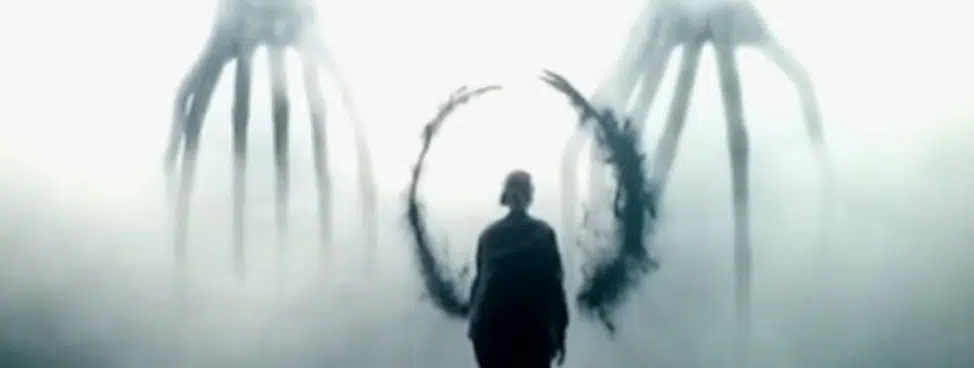
• Arrival (2016, dir. Denis Villeneuve) — A linguistic and emotional exploration of contact, time, and human connection
• Ex Machina (2014, dir. Alex Garland) — A modern fable on artificial intelligence, manipulation, and the ethics of creation
• Blade Runner (1982, dir. Ridley Scott) — A philosophical inquiry into memory, identity, and what it means to be human
• Children of Men (2006, dir. Alfonso Cuarón) — A dystopian portrait of social collapse, hope, and moral responsibility
• Her (2013, dir. Spike Jonze) — A reflection on intimacy, technology, and emotional authenticity in a mediated age
• Invasion of the Body Snatchers (1956 & 1978) — Cultural touchstones illustrating how anxiety shifts across generations
• The Day the Earth Stood Still (1951) — A Cold War-era parable on fear, global tension, and the possibility of change
Across the series, participants traced how these films—though wildly different in tone and style—use science fiction to examine what societies fear most at a given moment: loss of control, dehumanization, technological overreach, ecological collapse, or the erosion of trust in institutions and one another.
By the end of the program, the group had explored science fiction not as escapism, but as a genre uniquely capable of revealing the anxieties that sit beneath everyday life—and the creative possibilities that emerge when filmmakers imagine futures shaped by those concerns.